


Retail pricing isn’t about setting numbers; it’s about how those numbers move through a system. One delayed vendor update, one mismatched shelf tag, one local override. they add up quietly. A 1% price realization gap can shift profit by nearly 9%. Not because prices were wrong, but because the process was.
Most retailers don’t have a pricing problem. They have a system problem.
The Shift That’s Already Happening
Manual price books and gut-based decisions can’t keep up with markets that change by the hour. Pricing has to run like infrastructure – structured, traceable, and intelligent.
- 70% of retailers still rely on manual workflows.
- 60%+ link pricing errors to vendor feed delays and store-level overrides.
- Retailers adopting automated pricing logic scale 3x faster than peers.
Pricing is no longer clerical work. It’s operational intelligence. That’s exactly what PriceIQ delivers.
The Nine Pillars of Price IQ
1. Shelf Accuracy That Builds Trust
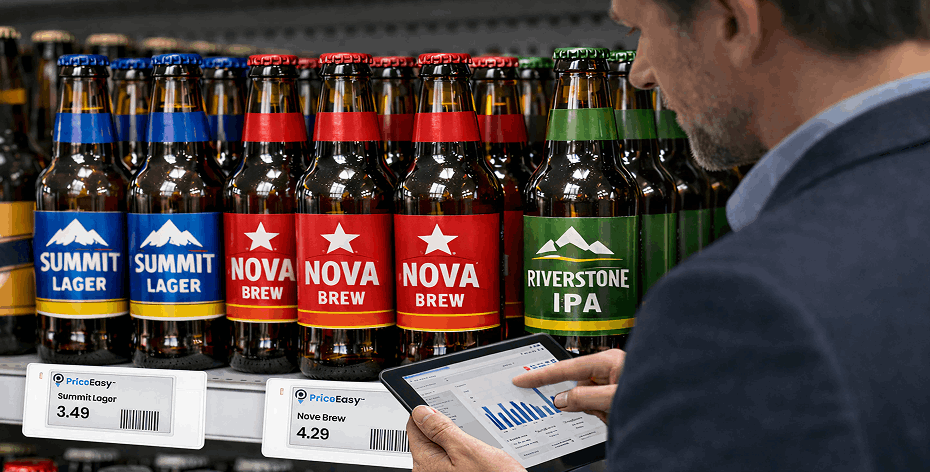
Trust at retail isn’t built in boardrooms. It’s built at the shelf. When customers see one price on the tag and another at checkout, they don’t complain, they just stop trusting. Over time, that erodes not just margin but brand reliability.
PriceIQ fixes that by creating a single source of truth from vendor file to shelf label.Every approved price travels instantly through the same data spine – Vendor → POS → ESL leaving no room for mismatched tags or manual corrections.
2. Centralized Control, Local Relevance
Most pricing teams live in the tension between central discipline and store autonomy. Centralization ensures guardrails; localization ensures relevance. PriceIQ was built to do both.
The result:
- Every store runs on the same logic, but each location can still reflect its market realities.
- City stores can hold a premium for convenience, while suburban stores can stay sharp on volume movers all without breaking consistency.

“It’s not about changing prices faster—it’s about making sure they show up right, every time, on the shelf.”
3. Dynamic Pricing That Thinks Like the Market
This is where pricing starts breathing.
- PriceIQ constantly reads external signals – competitor price scans, vendor cost updates, mobility data, even weather or event triggers and uses them to recalibrate prices in context.
- When a nearby chain drops prices by 2 percent on energy drinks or traffic surges after a stadium event, the system recognizes it and adjusts only the affected SKUs. No panic. No delay.
- Dynamic pricing here isn’t about charging more; it’s about staying aligned. Competitor and cost inputs update instantly, elasticity models evolve with real sales, and every move is logged for full visibility.
4. End-to-End Integration: Vendor → POS → Shelf
Most pricing errors don’t happen at the shelf; they happen between systems.
- Vendor data arrives late. The POS reads an outdated file. Labels print from old exports. By the time anyone notices, thousands of transactions have cleared at the wrong price.
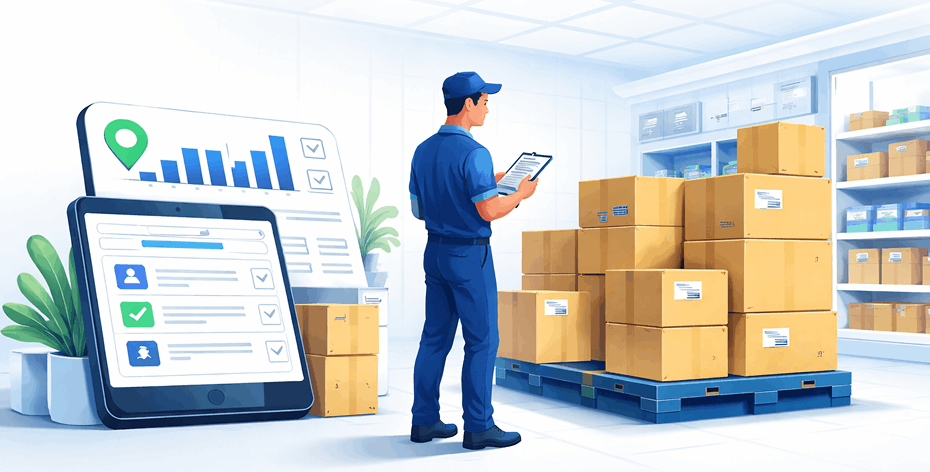
- PriceIQ closes that gap. Every update flow through one connected pipeline, from the moment a vendor uploads new costs to the instant the ESL flashes the change in-store.Integration turns pricing from a chain of emails into a live ecosystem.
When procurement, merchandising, and store ops share one system, execution finally keeps pace with intent.

5. Contextual Intelligence
Not every competitor’s move deserves a reaction, and not every discount creates value. That’s where context matters.
- PriceIQ blends competitive benchmarks, shopper sensitivity, and historical behavior to understand why a price should move not just that it can.
- If a temporary competitor discount is short-term noise, the system holds. If a category’s elasticity curve flattens, it adjusts promotion logic. If shopper data shows rising tolerance in a premium segment, it captures that opportunity.
Contextual intelligence means decisions rooted in behavior, not instinct. It’s the difference between reacting fast and reacting smart.
6. Zones That Scale Thoughtfully
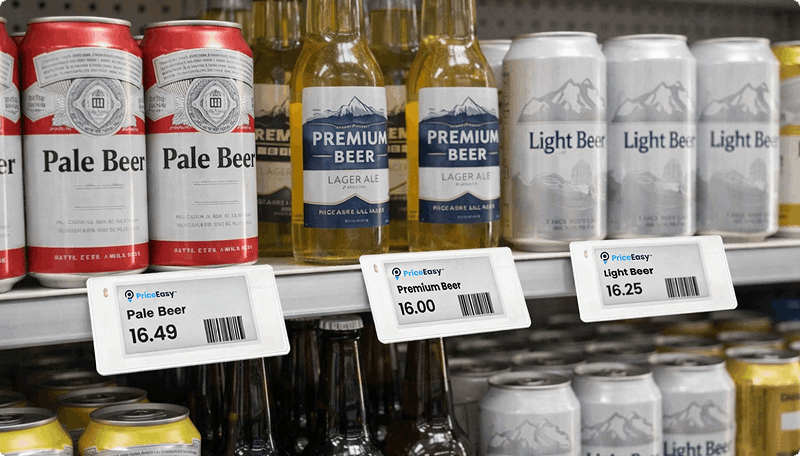
No two stores live in the same market reality. A price that performs at $2.49 downtown might stall at $1.99 in a rural corridor. Yet most legacy systems still force one-size pricing that fits none.
- Price IQ replaces that guesswork with data-driven pricing zones, clusters built from geography, demographics, income, category behaviour, and competitive intensity.
- Stores can be grouped into geographic zones (North, South, Highway) or category-based zones (Premium vs. Discount locations) wherever pricing logic needs to flex differently.
Each zone inherits central rules but learns locally. When vendor costs rise, updates cascade across all zones instantly. When demand shifts, each zone adapts within its guardrails staying consistent, but never static.
Zone Intelligence brings:
- Elasticity by geography and category
- Rule inheritance that keeps national logic intact.
- Benchmarking that exposes over- or under-performing territories.
- Visual clarity a map that shows how price differences shape performance in real time.

7. Full Traceability and Compliance
In multi-store operations, accountability often disappears in the cracks.
Price IQ makes every action visible – who changed what, when, and why. Every approval is logged, every exception tracked, every rule enforced automatically.
8. Continuous Optimization
Even the best pricing logic decays if it doesn’t evolve.
- Price IQ treats every pricing cycle as a feedback loop. It learns from performance, surfaces anomalies, and flags SKUs or categories that behave differently than expected.
If a zone consistently over-performs a benchmark, the system highlights it for best-practice replication. If a rule under-delivers, it recommends recalibration.
9. Advisory Intelligence
Price IQ runs the data – millions of price points, costs, and competitive signals but PriceEasy’s Advisory Team brings the context that only people on the ground can provide.
Working directly with retailers, the Advisory Team identifies the top SKUs that should operate under dynamic pricing – the items that truly move daily sales and influence shopper perception.
They combine system analytics with field insight to judge:
- Which high-volume SKUs drive real profit sensitivity.
- Where elasticity can be tested safely.
- How competitor volatility should shape strategy
How PriceEasy Helps
Price IQ brings structure, speed, and accountability to retail pricing.
- One pricing brain across every store
- Automated updates that cascade instantly
- Guardrails that protect margin
- Dashboards that show where execution slips
- Reliable pricing that adapts to the real world
Price IQ turns pricing into a reliable operating system not just accurate, but intelligent and connected.
Conclusion
Retail pricing is no longer defined solely by strategy or competitive analysis. In today’s environment, success depends on the ability to execute pricing decisions accurately across thousands of products, stores, and pricing zones.
Solutions like Price IQ address this challenge by bringing pricing intelligence and execution together in a unified workflow. By centralizing pricebook management and automating deployment across store networks, retailers can ensure that their pricing strategies are applied accurately and efficiently.
In modern retail, pricing advantage does not come from changing prices faster, it comes from executing pricing strategy reliably, consistently, and at scale across every shelf in the store.